
Have you ever wondered what helps produce the fuel used in cars and airplanes, the plastics found in everyday packaging, or many of the products people rely on daily?
Behind many of these materials and industrial processes lies catalysis, a form of chemistry that plays a critical role in modern manufacturing and energy production.
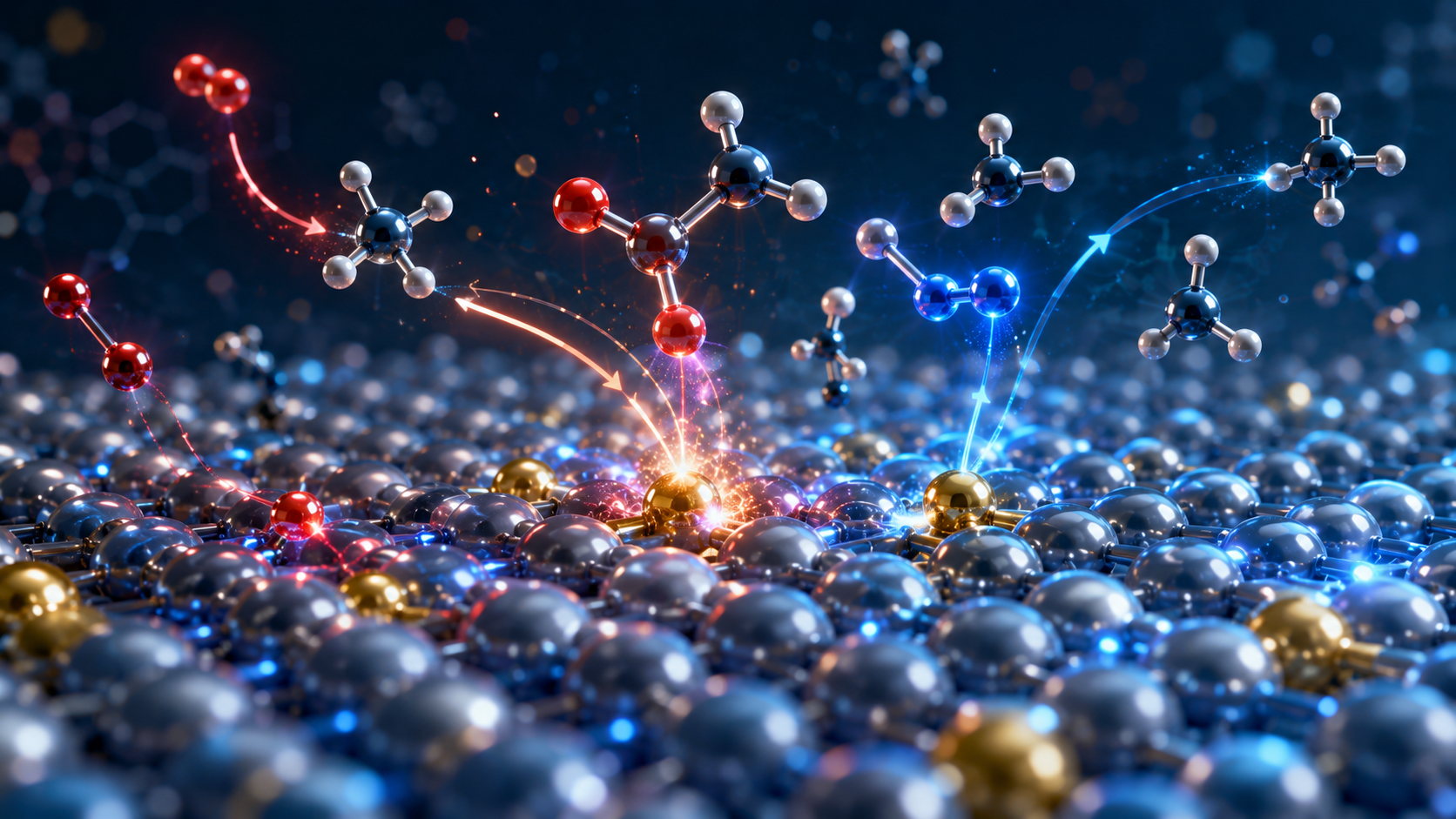
Catalysts are materials that accelerate chemical reactions, helping industrial processes become faster and more efficient. One familiar example is the catalytic converter used in vehicle exhaust systems, which helps break down harmful gases before they are released into the atmosphere. From fuels and plastics packaging to cleaning products and pharmaceuticals, catalytic processes are involved in producing many of the materials that support modern life.
As concerns surrounding climate change and carbon emissions continue to grow, researchers are increasingly exploring how catalytic systems could help create cleaner and more environmentally responsible industrial processes.

“The vast majority of the world runs on products formed through catalytic reactions.”
Prof. Khare's research explores how catalytic reactions occur at the molecular level, with a particular focus on carbon dioxide conversion, carbon capture, plastics upcycling, and cleaner fuel production. By understanding how catalysts behave during these reactions, his work aims to support the development of more efficient and sustainable industrial processes.
At the same time, emerging tools such as molecular simulations and AI are beginning to reshape how researchers study complex chemical systems and accelerate scientific discovery. While molecular simulations use physics-based models to predict how molecules and reactions behave, AI can identify patterns in large datasets, helping researchers prioritize promising experiments and accelerate discovery
How Can Catalysis Help Address Sustainability Challenges?
Many industrial systems still rely on fossil fuels and energy-intensive manufacturing processes, contributing significantly to carbon emissions.
For Prof. Khare, improving catalytic systems is about making industrial processes cleaner, more efficient, and more sustainable.
“Many of these products are made from non-sustainable sources such as crude oil, coal, or natural gas. The goal of current research is to make these processes more sustainable while exploring alternative pathways that make industrial technologies cleaner and more circular in nature.”
Improving efficiency is a major challenge within industrial chemistry. Many catalytic reactions require large amounts of energy, and even small improvements in catalytic efficiency could significantly reduce fuel consumption and carbon dioxide emissions. Researchers are also exploring more sustainable catalyst materials and ways to convert waste products such as carbon dioxide and plastics into useful fuels and industrial materials. Imagine if a discarded plastic bottle could be converted into useful chemicals or fuels rather than ending up as waste.
Prof. Khare's research explores how catalytic systems can help convert carbon dioxide and other carbon-based waste materials into useful fuels, chemicals, and industrial products. If we can convert these materials back into useful chemicals or fuels in an efficient way, it creates opportunities for more sustainable industrial processes in the future, he says.
This research is particularly relevant in the UAE, where sustainability, clean energy, and circular economy initiatives are national priorities.
“Carbon dioxide is one of the most stable molecules found in nature, which means converting it into useful products requires a significant amount of energy. The challenge is to develop catalytic systems that can lower these energy requirements and make the conversion process more efficient and economically viable.”
Addressing these challenges requires a deeper understanding of how reactions behave at the molecular level.
How Can AI Accelerate Scientific Discovery?
As catalytic systems become increasingly complex, researchers are exploring how AI and advanced computational tools could help accelerate scientific discovery.
One of the major challenges in catalysis research is that many reactions involve a very large number of possible material combinations and reaction pathways, explains Prof. Khare. Traditionally, researchers would need to carry out a huge number of experiments to determine which catalytic systems perform best.
He believes AI and advanced computational tools could help researchers navigate this complexity more efficiently by identifying promising reaction pathways before they are tested experimentally.
“AI is not replacing scientific research or experimental work. What it can do is help researchers process very large amounts of data more efficiently and identify patterns that might otherwise take much longer to discover.”
According to Prof. Khare, combining AI with molecular simulations and experimental research could significantly accelerate scientific discovery across areas such as catalysis, sustainable fuels, and carbon conversion systems. By helping the prioritize the most promising experiments, researchers may also be able to lower resource consumption and improve research efficiency.
For Prof. Khare, the growing use of AI and computational tools reflects a broader shift in how future scientific research may increasingly be conducted.
Prof. Khare Long-Term Vision for Research at IIT Delhi – Abu Dhabi
Beyond individual discoveries, the future of scientific research is likely to become more collaborative, connected, and data-driven.
At IIT Delhi – Abu Dhabi, Prof. Khare sees significant potential for interdisciplinary collaboration across areas such as chemical engineering, energy systems, materials science, and AI.
“One of the advantages of building research programs within a newer institution is that there is an opportunity to think carefully about how research workflows are designed from the beginning.”
If Artificial Intelligence, computational modeling, and data management practices are integrated early into the research workflow, it becomes much easier for researchers to organize information, share data across disciplines, and accelerate collaboration between different scientific areas.
His vision for IIT Delhi – Abu Dhabi is to help build a research environment where experimental science, computational tools, and AI are integrated from the outset rather than added later. As the institution continues to grow, he sees an opportunity to help shape interdisciplinary research programs that bring together expertise from across scientific fields to address complex sustainability challenges. In practice, these systems could allow researchers across IIT Delhi – Abu Dhabi and partner institutions to compare experimental data more efficiently and avoid unnecessarily repeating experiments.
By encouraging collaboration across disciplines and strengthening connections with the UAE's wider research ecosystem, he believes the institution can help advance research in sustainable fuels, carbon conversion technologies, and cleaner industrial systems.
For Prof. Khare, the future of scientific research will depend not only on individual discoveries, but also on how effectively researchers combine scientific expertise, emerging technologies, and interdisciplinary collaboration to address increasingly complex global challenges.
Looking Toward a More Sustainable Future
“The ultimate goal is to ensure that the products people use every day can be produced in cleaner, more sustainable, and environmentally responsible ways.”
Many of today's environmental and energy challenges require solutions that operate at both scientific and industrial scales. While much of catalysis research takes place at the molecular level, its impact could ultimately influence how fuels, materials, and everyday products are produced.
Achieving that goal will require more than individual scientific breakthroughs. It will depend on how effectively researchers combine scientific expertise, emerging technologies, and interdisciplinary collaboration to address increasingly complex sustainability challenges.
As IIT Delhi – Abu Dhabi continues to grow, Prof. Khare sees an opportunity to help shape research that not only advances scientific understanding, but also supports cleaner industrial systems, more sustainable manufacturing, and responsible use of carbon-based resources.